A customer emailed us last month asking why one coffee table on our site cost less than half of another that looked almost the same size. Fair question. She had a rental apartment, a toddler who uses every surface as a drum kit, and no interest in spending a fortune on something that might get moved again in a year. That conversation is basically this whole article.
Coffee tables get compared on looks first and material second, but material is what decides whether the table survives your actual life. Here’s how engineered wood stacks up against reclaimed timber and a compact storage design, based on what we see customers actually use them for.
Engineered Wood: the practical middle ground
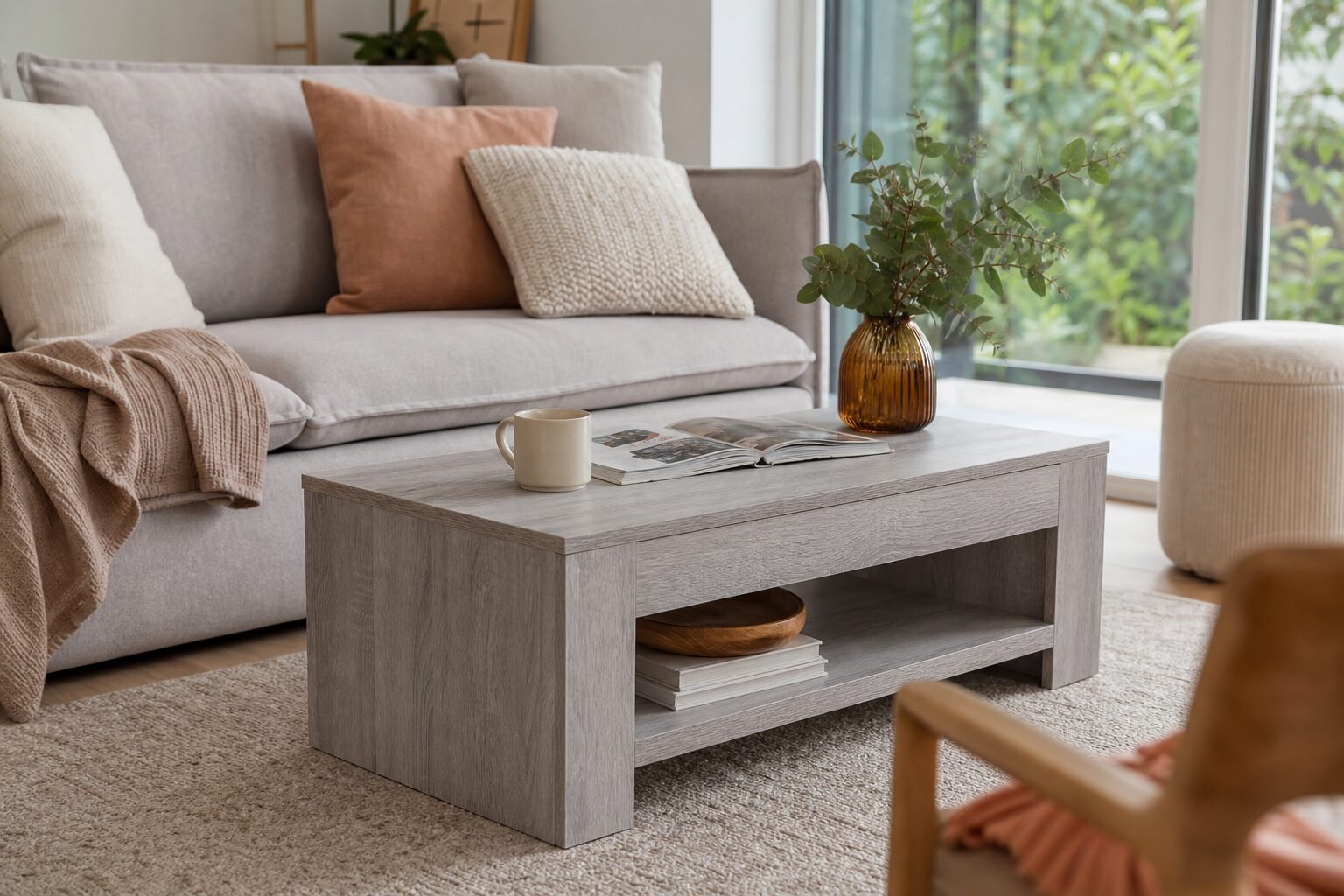
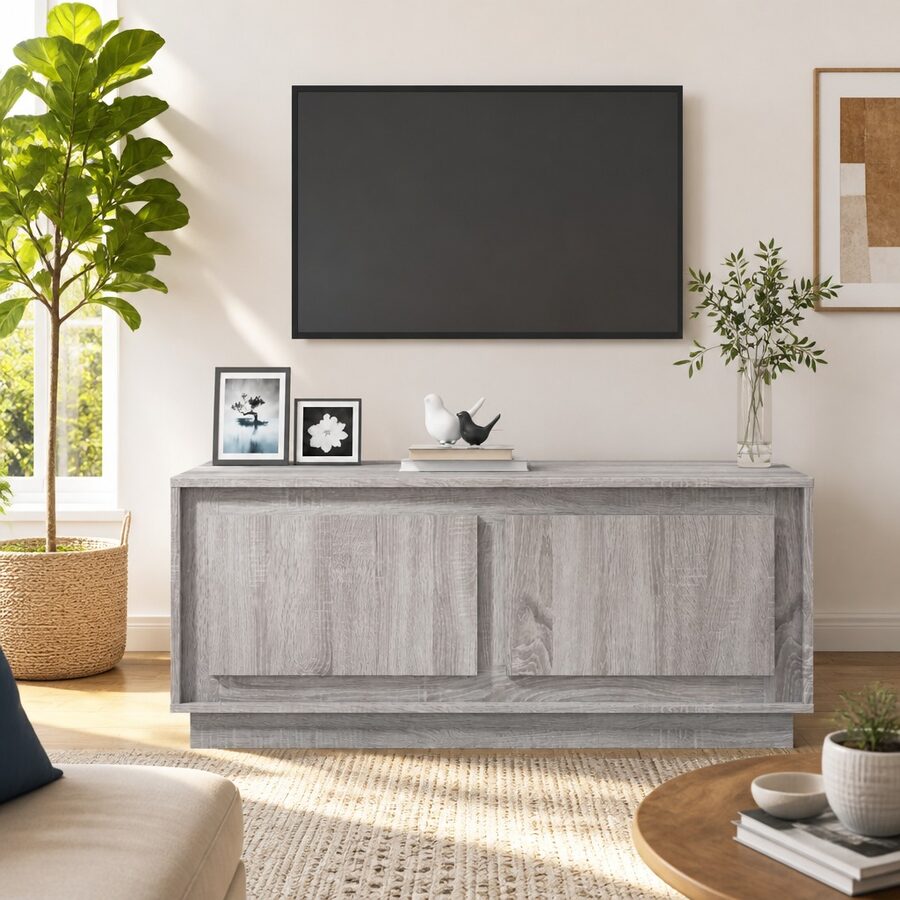
Our Engineered Wood Coffee Table in Grey Sonoma is 102x50x44cm, which is the sweet spot for a three-seater sofa. Engineered wood is layered timber (usually a plywood or particleboard core) topped with a durable laminate or veneer finish. The Grey Sonoma finish mimics oak grain without the oak price tag or oak weight.
Why people choose it:
- It resists warping better than solid timber in Melbourne’s swing between humid summers and dry heating season.
- It’s noticeably lighter to carry through a doorway or up a narrow apartment staircase.
- The surface handles spilt coffee and kids’ textas better than raw or lightly oiled wood — a quick wipe and it’s done.
- It costs less per centimetre than genuine reclaimed or solid timber, so you can put the savings into a better rug.
The trade-off is honesty about what it is. It won’t develop the same character marks as real aged timber, and if you gouge the laminate deeply, you can’t sand it back the way you would solid wood. For most living rooms — where the table is getting used daily, not admired as a heirloom — that’s a fair swap.
Reclaimed Wood: character, but it comes with conditions
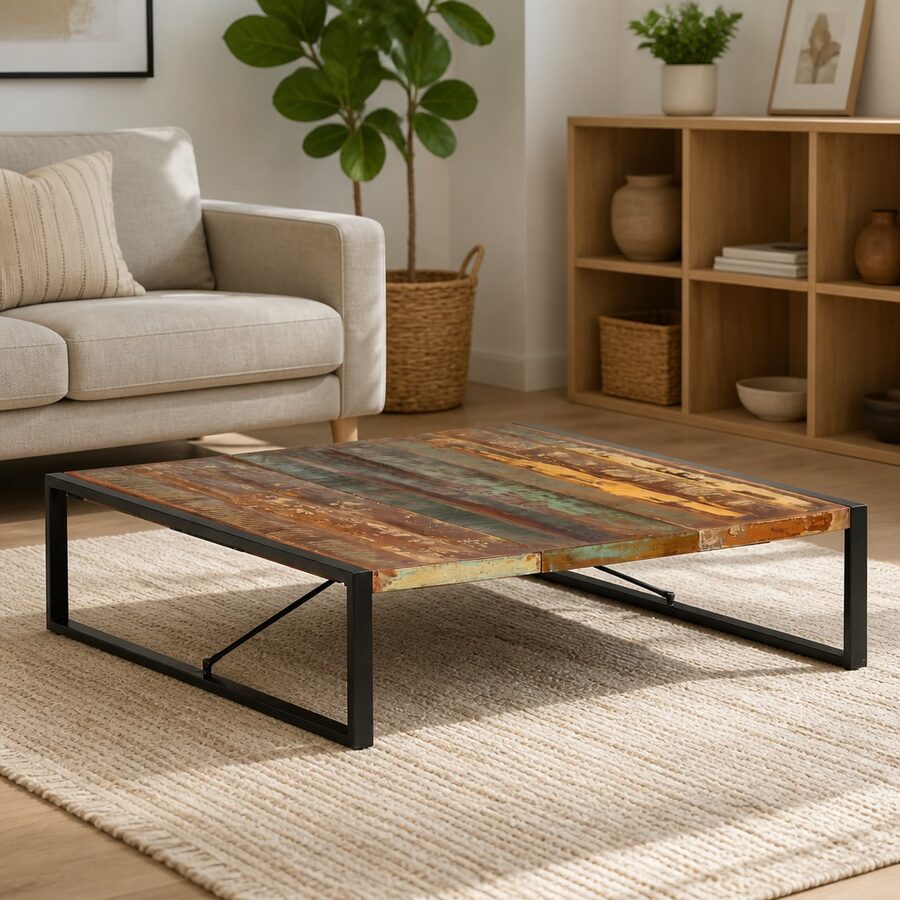
The Reclaimed Wood Coffee Table with Steel Legs is a different animal entirely — 140x140x40cm, so it’s built for a bigger room, ideally with a sofa on at least two sides or a sectional. Reclaimed timber is genuinely old wood, often from packing crates, barns or old structural beams, cut down and reassembled. Every plank carries its own grain, nail holes, colour variation and the odd knot.
What you’re actually buying here:
- A table that looks different from anyone else’s, because no two reclaimed pieces are identical.
- Real weight and solidity — the steel leg frame plus dense old timber means this table isn’t shifting around when someone puts their feet up.
- A finish that will show its age gracefully. Scratches and dents tend to blend into the existing character rather than standing out like they would on a smooth laminate.
The catch is size and commitment. At 140cm square, this is a statement piece for an open-plan living area, not a squeeze-in for a one-bedroom unit. Reclaimed timber can also vary in tone from batch to batch since it’s sourced material, not manufactured to a colour swatch — so if you’re matching it to existing oak furniture, check the listing photos closely rather than assuming a perfect match.
Storage Coffee Tables: solving a different problem entirely
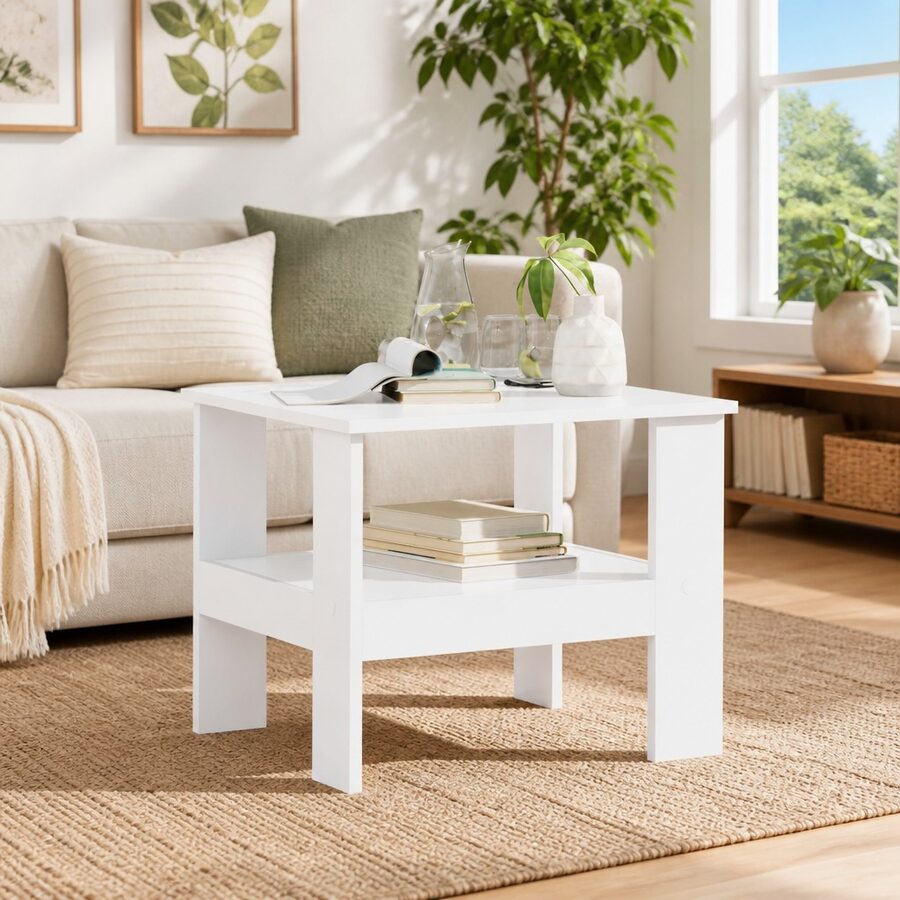
Sometimes the material question isn’t the real issue — space is. The Coffee Table with Storage Shelves in White at 57x55x45cm is built for compact living rooms, apartments, or as a second table beside an armchair. It trades the visual impact of the two tables above for genuine function: a shelf underneath for magazines, remotes, or the kids’ colouring books that otherwise end up under the couch cushions.
If your living room is under 20 square metres, or you’re furnishing a studio, this size and format usually beats a large centrepiece table. You get somewhere to put your coffee and somewhere to hide the clutter, in a footprint that doesn’t dominate the room.
Comparing them side by side
Here’s the quick version if you’re deciding between the three:
- Small-to-medium living room, family use, budget-conscious: the engineered wood Grey Sonoma table. It’s the size that fits most Australian rental living rooms and shrugs off daily wear.
- Large open-plan space, want a statement piece, don’t mind some character/imperfection: the reclaimed wood table with steel legs. It anchors a big room in a way a smaller table can’t.
- Tight footprint, need storage, secondary seating area or apartment living: the white storage coffee table. Function over statement.
What actually matters for day-to-day durability
People assume solid or reclaimed timber is automatically “better” than engineered wood, but better depends on the job. Engineered wood with a quality laminate finish is more resistant to moisture rings, scuffs and UV fading near a window than raw or lightly sealed reclaimed timber. Reclaimed wood, on the other hand, ages in a way that photographs beautifully but does require occasional attention — reapplying oil every year or two if it’s near direct sun, and accepting that some surface movement is part of the material’s character, not a fault.
If you’ve got young kids, renters’ inspections to worry about, or you just want to stop thinking about your furniture, engineered wood removes most of that mental load. If you want a table that looks like it has a history — even a manufactured one — reclaimed timber gives you that in a way no laminate ever will.
A note on assembly and weight
Engineered wood tables are generally flat-pack and go together with an Allen key in under 20 minutes — the Grey Sonoma model included. Reclaimed timber with steel legs tends to arrive with the tabletop pre-assembled and legs bolted on separately, since the timber slab itself isn’t something you’d want to flat-pack. Worth knowing before moving day, because the reclaimed table is genuinely heavier to lift into place once built.
Whichever you land on, measure your sofa length before you buy. A coffee table should sit roughly two-thirds the length of your sofa and leave at least 35cm of walking space around it — that’s the detail that decides whether a table feels right in the room, more than the material ever does.