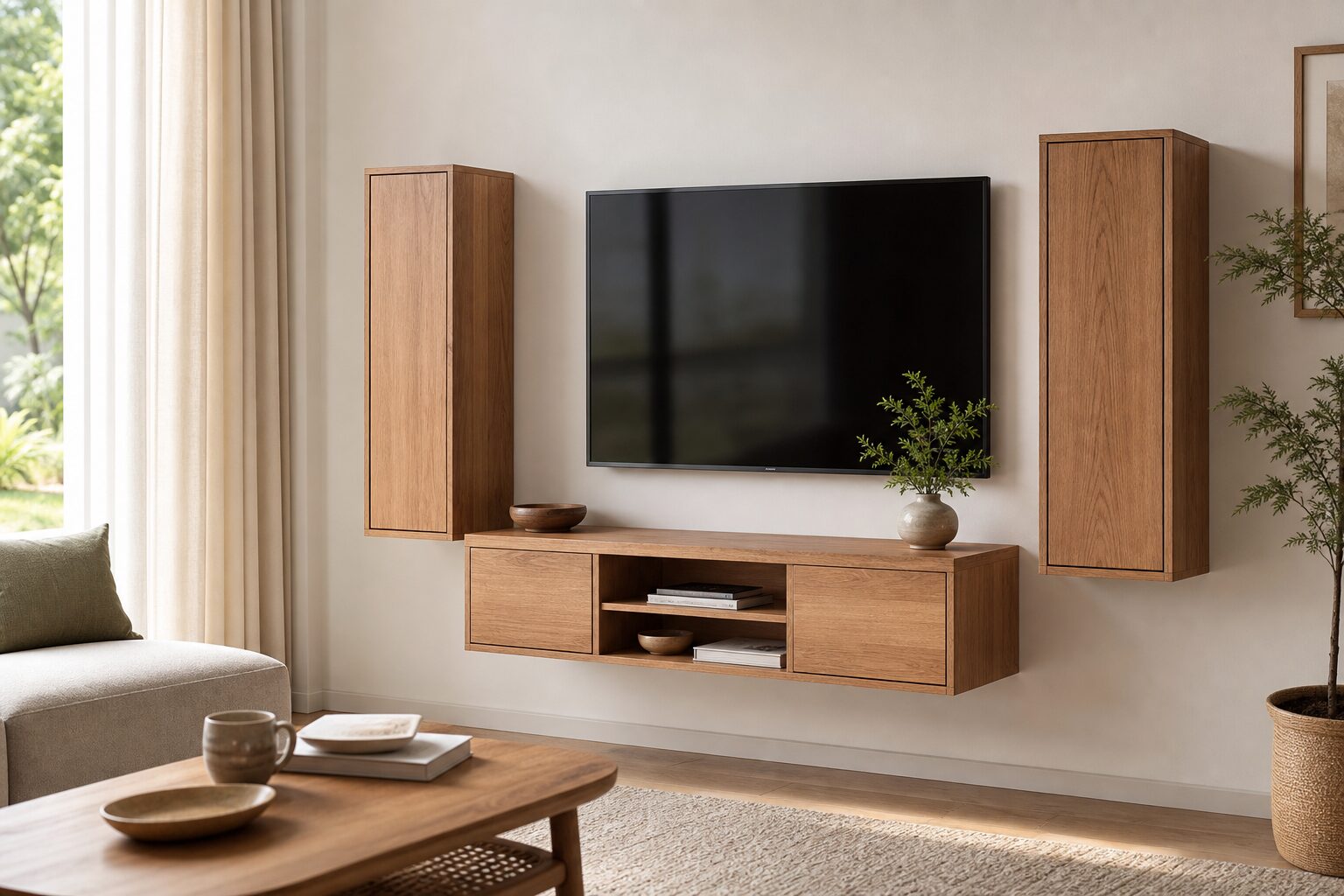
A customer emailed us last month asking if we had anything that would stop her toddler from using the TV console as a climbing frame. Fair question. Floor-standing units are exactly the right height for a two-year-old to grab onto, and exactly the wrong height for keeping remotes, consoles and cables out of reach. That’s the actual problem behind most “TV unit” searches: it’s never really about the TV. It’s about the mess and the space underneath it.
If your living room feels smaller than it is, or your rug is permanently covered in cords, a wall-mounted TV cabinet set is worth a proper look. Getting the cabinet off the floor changes the whole feel of a room, not just the tidiness of it.
The problem with a standard floor-standing TV unit
Most lounge rooms in Melbourne apartments and townhouses aren’t huge. A typical floor unit is 40-45cm deep, which doesn’t sound like much until you’re trying to fit a console, a fan, a rug and a coffee table in the same 4-metre wall. A few things we hear on repeat from customers:
- The unit “eats” the room visually, making the ceiling feel lower and the space feel boxier.
- Cables trail across the floor to the wall socket, and no amount of cable ties actually fixes it.
- Dust and pet hair collect underneath, and vacuuming around cabinet legs is a chore nobody enjoys.
- Kids and pets treat the open shelf as storage for toys, or worse, a step stool.
Why wall-mounted changes the equation
Lifting the cabinet off the floor does two things at once. First, it gives you back the visual floor line — you can see skirting boards and rug edges again, which makes even a small room read as more open. Second, it removes the temptation for little hands and paws to get underneath.
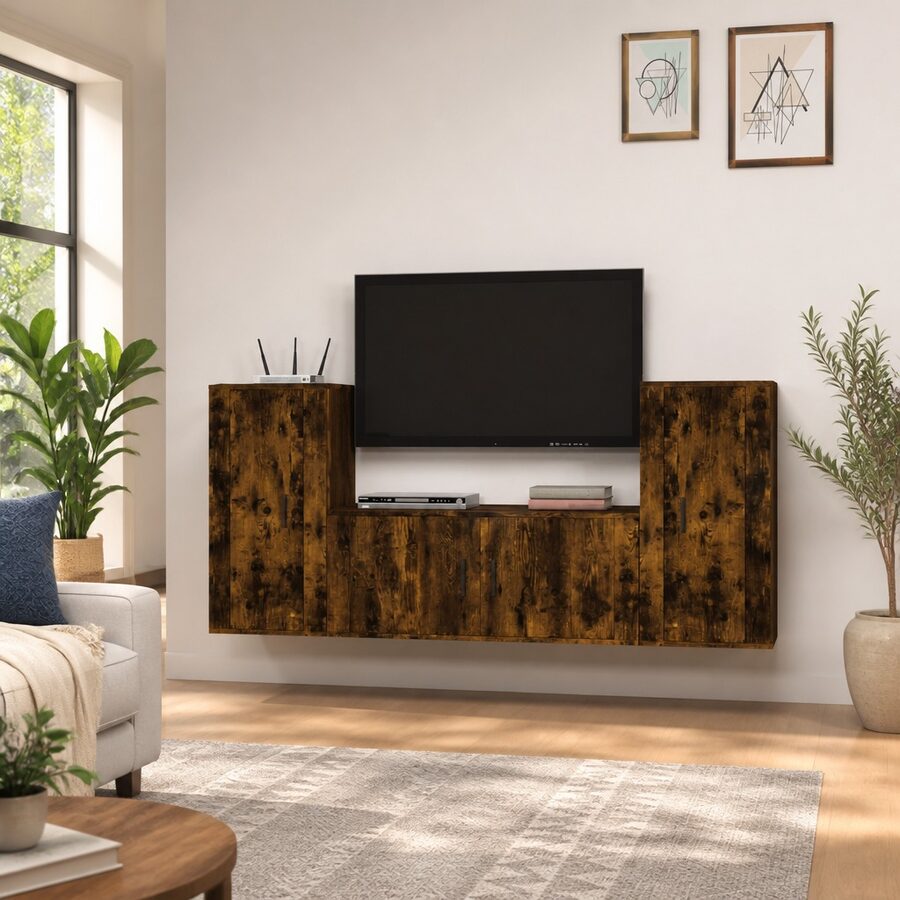
The Engineered Wood Wall-Mounted TV Cabinet Set is built around this idea. It’s three pieces — typically a central TV cabinet and two flanking units — so you get proper storage either side of the screen without a single leg touching the carpet. Engineered wood keeps the panels stable and resistant to warping, which matters near a TV that runs warm for hours at a time, and the warm neutral tones sit well against most wall colours without shouting for attention.
What actually goes wrong with wall-mounted units (and how to avoid it)
We won’t pretend wall-mounted cabinets are foolproof. The three genuine issues people run into:
- Wrong wall type. Plasterboard alone won’t hold a loaded cabinet — you need to hit a stud or use rated anchors rated for the combined weight of the cabinet and everything inside it. If in doubt, get an electrician or handyman to check stud placement before you drill.
- Cables still visible. Mounting the box doesn’t automatically hide the cords running to your router or soundbar. Plan the cable path before installation — most people run a short conduit or cable channel down to a floor-level power point, tucked behind the cabinet’s shadow line.
- Ventilation. Consoles and set-top boxes generate heat. Look for a cabinet with back panel cutouts or gaps, not a fully sealed box, so gear doesn’t overheat during a long movie night.
Assembly-wise, budget 60-90 minutes for the full three-piece set if you’re doing it solo, longer if you’re also fishing cables through the wall. A second pair of hands makes lifting the central cabinet onto its wall bracket much easier — engineered wood is sturdy but still awkward to hold one-handed while you line up screws.
If you want more than a TV cabinet — a full wall arrangement
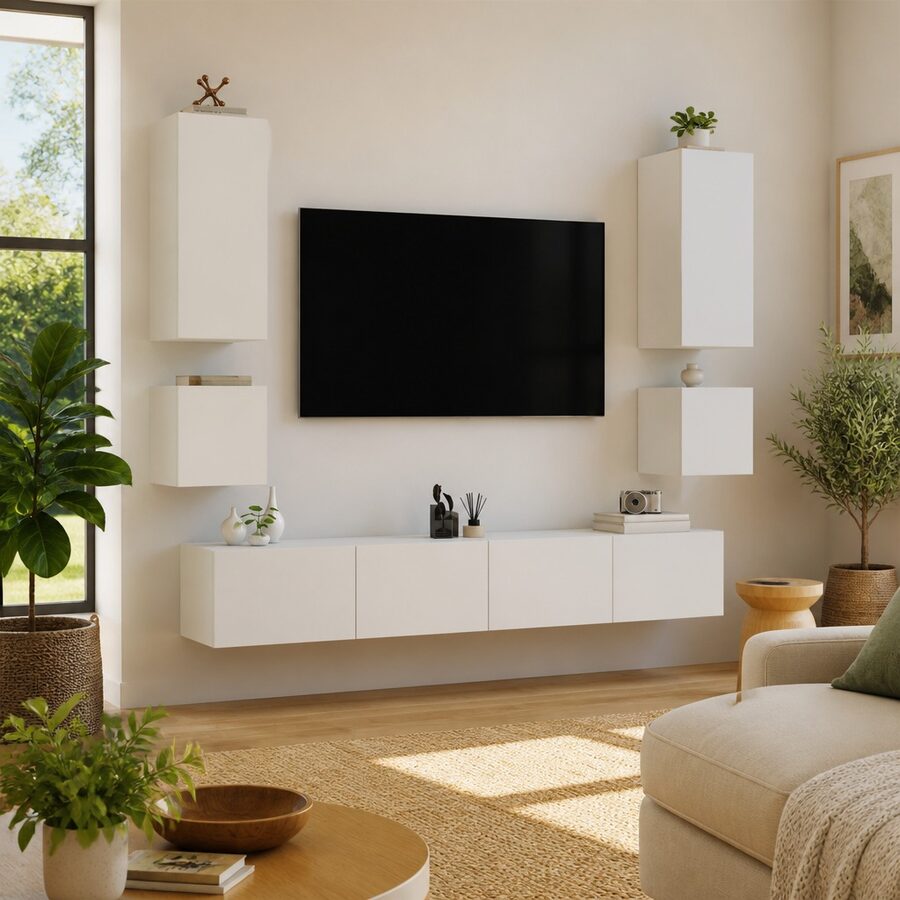
Some living rooms need more than a centre unit and two side cabinets. If you’re furnishing an open-plan space and want the whole wall to feel deliberate rather than patched together, the 6 Piece White Engineered Wood Wall Cabinets with LED Lights gives you a full modular layout. The built-in LED lighting is genuinely useful here, not just decorative — it lifts the display shelves so ornaments and books don’t sit in shadow, and it adds soft ambient light for evening TV watching without the glare of overhead downlights.
What to do with the space you’ve just freed up
Once the main unit is off the floor, most people realise they still want somewhere low and stable for the actual TV or console — especially if you’re not mounting the screen itself to the wall. This is where a small stand earns its keep. The Tempered Glass TV Stand Monitor Riser works well tucked beneath a wall-mounted cabinet, lifting a games console, streaming box or monitor just enough to improve airflow and keep cords organised in the gap underneath. It’s a small piece, but it solves the “where does the actual box go” question that wall cabinets alone don’t answer.

Measuring before you buy
Before ordering, measure your wall width and the height from your preferred seated eye-line to where the TV centre will sit — usually 1.0-1.2m from the floor for a standard sofa. Check the three-piece set’s total width against your wall, and leave at least 5-8cm either side of the outer cabinets so the arrangement doesn’t look cramped against a corner or doorway.
Living with it day to day
Once it’s up, the maintenance is genuinely minimal. Wipe engineered wood surfaces with a damp microfibre cloth, avoid harsh solvents, and check mounting brackets every year or so, especially if the cabinet holds heavier gear like a soundbar or games console. That’s really the whole routine — no legs to dust around, no cords to trip over, and a lot more floor to actually enjoy.